
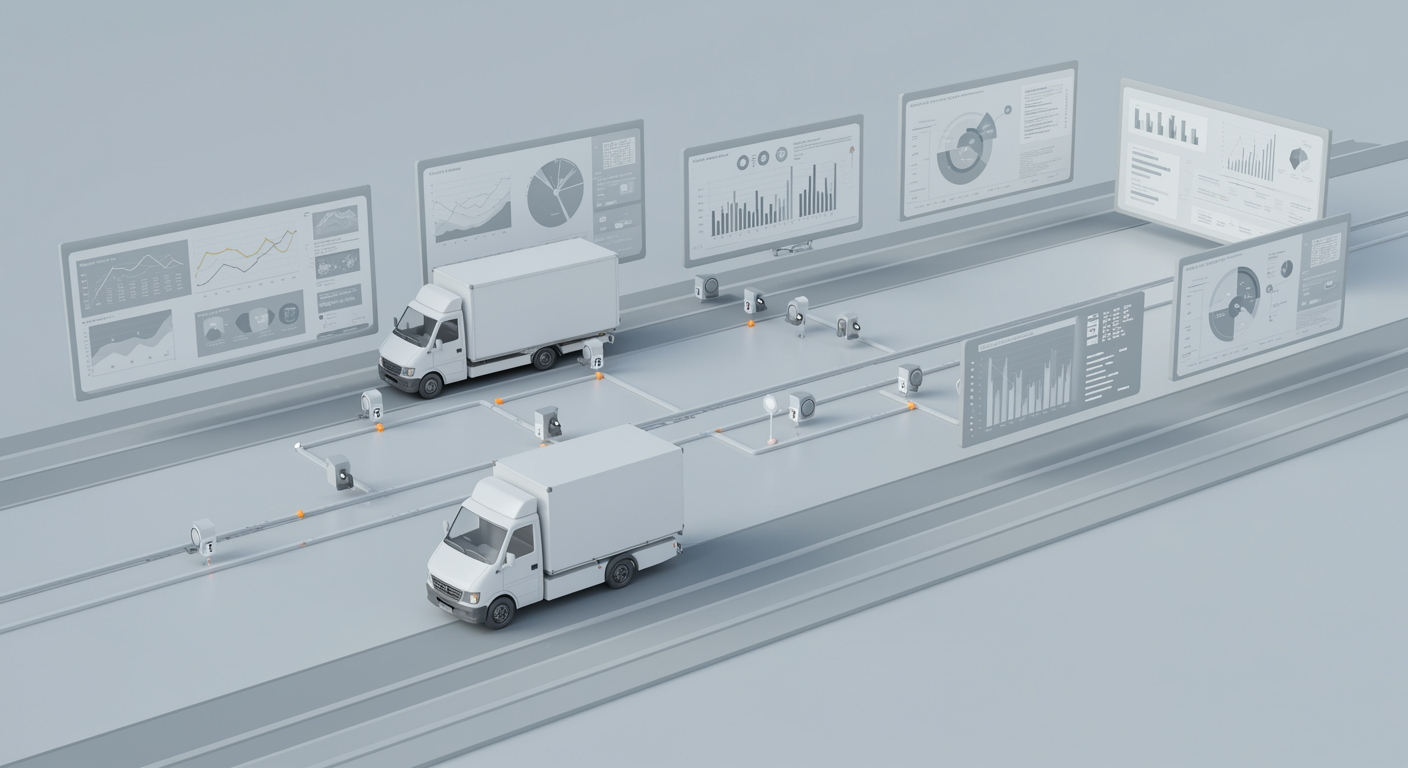
As global e-commerce and on-demand services continue to expand, 2026 is set to redefine how goods are transported, stored, and delivered. For logistics providers in the UK and UAE, staying ahead of evolving expectations requires more than just efficiency — it demands adaptability, innovation, and insight into consumer behavior and business technology. This blog highlights the most critical trends in logistics and delivery that will shape operational success in 2026.
Artificial Intelligence (AI) will continue to revolutionize the logistics sector by enhancing route planning, vehicle tracking, and fleet performance. Real-time route optimization using AI algorithms allows delivery companies to reduce fuel consumption, avoid delays, and respond to changing traffic patterns dynamically.
Companies like Independent Reworks, which cater to high-volume clients such as Amazon, are already leveraging smart technologies for real-time fleet tracking and delivery performance monitoring. In 2026, predictive maintenance powered by AI will also reduce vehicle downtime and prolong fleet life.
Sustainability is no longer a buzzword — it is a requirement. Governments in the UK and UAE are tightening regulations on emissions and offering incentives for green transport. In response, logistics providers are investing in electric vehicles (EVs), eco-friendly packaging, and carbon offset programs.
Urban delivery fleets are likely to transition to electric or hybrid models, particularly in congestion-charging zones like London and low-emission zones in Dubai. Additionally, data-driven carbon footprint monitoring will become part of client SLAs.
Last mile delivery remains the most expensive and complex part of the logistics chain. In 2026, businesses are addressing this with hyper-local delivery hubs, improved address validation, and alternative delivery models like lockers and pickup points.
Middle mile operations will also see a boost in efficiency through technology-enabled consolidation centres and AI-based load balancing. Independent Reworks already supports both middle and final mile deliveries — and in 2026, these segments will become increasingly interdependent.
Shippers and customers demand transparency. In 2026, logistics companies will rely on connected devices, IoT, and APIs to offer real-time tracking from warehouse to doorstep. APIs will allow seamless data exchange between client systems and logistics platforms.
Cloud-based dashboards will provide operations teams with insights into delivery time, fleet performance, warehouse status, and returns processing — all in real time. This visibility reduces errors, improves trust, and supports faster response to service issues.
To keep pace with rising demand and reduce dependence on manual labor, logistics companies are automating warehouse operations. In 2026, expect increased adoption of:
This automation supports faster picking, error-free packing, and reduced warehouse costs — critical for same-day or next-day delivery expectations.
The logistics landscape in 2026 is fast-paced and highly tech-driven. Businesses that embrace digital transformation, sustainability, and customer-first delivery models will be best positioned to thrive. At Independent Reworks, we are already integrating many of these trends into our operations — from route optimization to warehouse digitization — ensuring that our clients always stay ahead of the curve.
Contact our team at enquiries@irllogistics.org or call +44 121 285 0065 to learn how Independent Reworks can support your supply chain goals in 2026 and beyond.
Share your details and receive a quick estimate.